Editorial Note
This article is an original SmartTechFusion editorial piece focused on real deployment decisions, not generic fleet software marketing.
SmartTechFusion publishes implementation-focused articles written to support real products, prototypes, dashboards, and industrial deployments.
A practical guide to building a GPS fleet visibility system that helps smaller operators control routes, alarms, driver accountability, and reporting without enterprise waste.
Why smaller fleets need structure early
Many vehicle businesses wait too long before introducing discipline into tracking. At the start, owners still know every driver personally and can often solve problems over the phone. Once the vehicle count rises, that informal method breaks down. Late arrivals, route deviations, fuel disputes, and missing trip history start to cost time and money.
A useful fleet platform for a small or mid-size operator should not copy every feature from a large enterprise system. It should solve the main control problems first: where each vehicle is, whether it is moving, what alarms need action, and how to review past activity clearly.
A lean system architecture that actually works
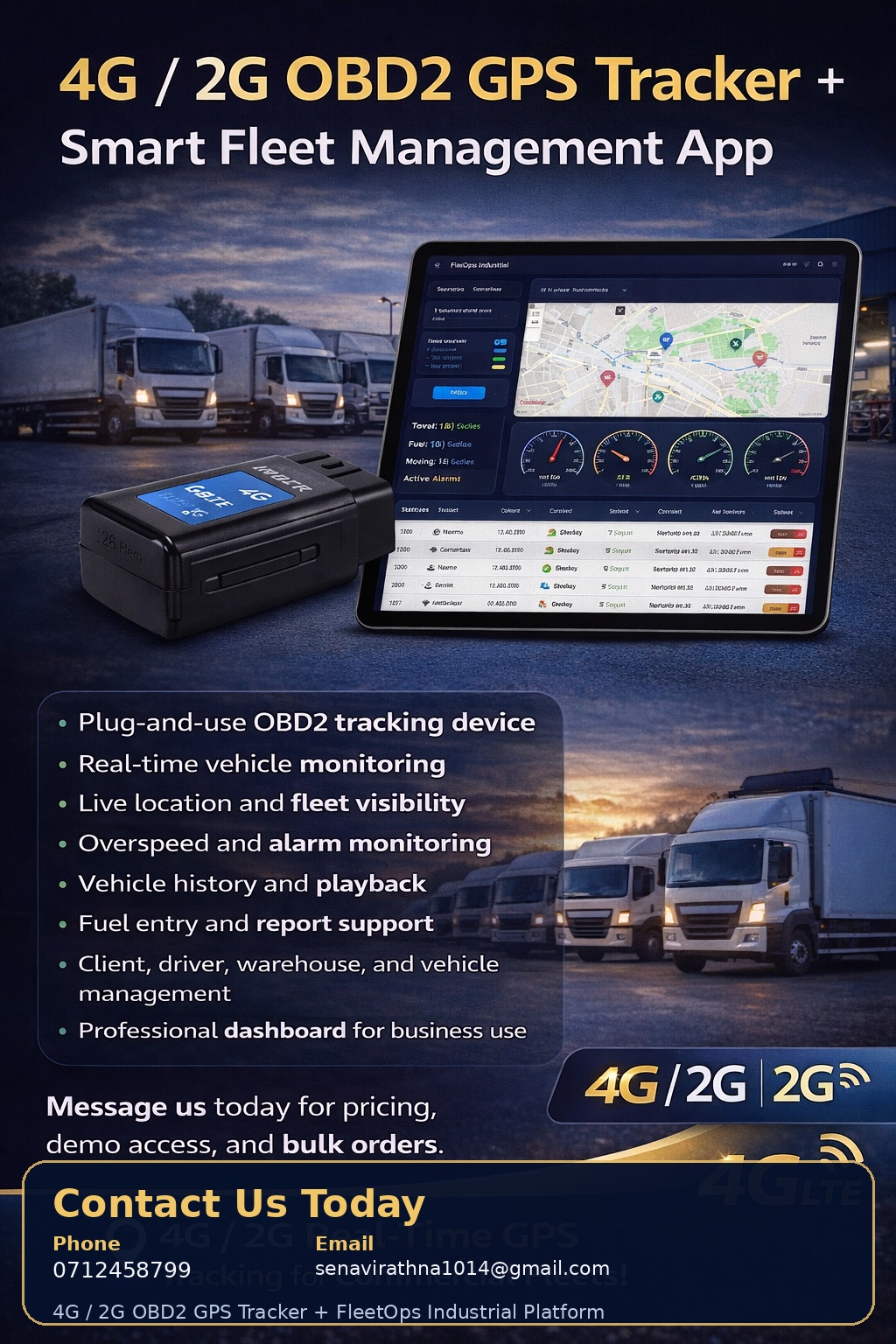
The most practical stack has three layers. First is the hardware layer, usually an OBD-II or wired GPS tracker that provides location, ignition status, speed, and other supported vehicle data. Second is the platform layer, where live maps, alarms, history playback, and user management live. Third is the business layer, where vehicles are assigned to clients, branches, warehouses, or internal departments so the data reflects real operations instead of raw device IDs.
For many businesses, the biggest design mistake is staying stuck at the hardware layer. Selling a tracker alone is easy. Building a usable management system is what creates long-term value.
- Tracking device with reliable network support
- Dashboard with live status, playback, and alarms
- Vehicle-to-client or vehicle-to-branch assignment
- Daily or weekly operational reporting
- User roles for admin, operator, and client access
What managers should see on the first screen
A good fleet dashboard should answer the obvious questions in seconds. How many vehicles are online? Which ones are moving? Which units are stale, offline, or outside a rule? Which alarms remain unacknowledged? Managers should not be forced to dig through multiple pages just to know whether the operation is healthy.
That first screen should also separate activity from noise. One stale tracker on a parked backup vehicle is not the same as a production truck that missed a delivery route. Alert severity and acknowledgment matter.
Common implementation mistakes
The first mistake is poor naming. If the platform still shows only tracker IDs, staff will stop trusting it. Use vehicle numbers, driver names, customer labels, or branch names wherever possible.
The second mistake is trying to configure every rule on day one. Start with location, movement, overspeed, stale device alarms, and historical playback. Add advanced workflows only after the client has basic daily adoption.
The third mistake is ignoring reporting discipline. A system that tracks well but cannot produce management reports usually gets treated as a map viewer instead of an operating tool.
What SmartTechFusion would prioritize
For this kind of project, the best starting point is a controlled pilot. Pick a limited set of vehicles, define naming rules, confirm who receives alerts, and decide which reports management actually reads. Then harden the live dashboard before scaling out.
That order matters. A clean rollout with fewer vehicles is more useful than a messy rollout across the whole fleet. Once the dashboard reflects real operations and the alarms are meaningful, scaling becomes straightforward.
Closing view
Fleet visibility is not about dots moving on a map. It is about accountability, faster decisions, and fewer arguments when operations go wrong. A smaller business that installs the right controls early gains a serious advantage over competitors still running on calls, screenshots, and memory.
If you want a practical deployment rather than a marketing demo, the solution should be built around live visibility, alarm workflows, history playback, reporting, and a clean business structure from the beginning.