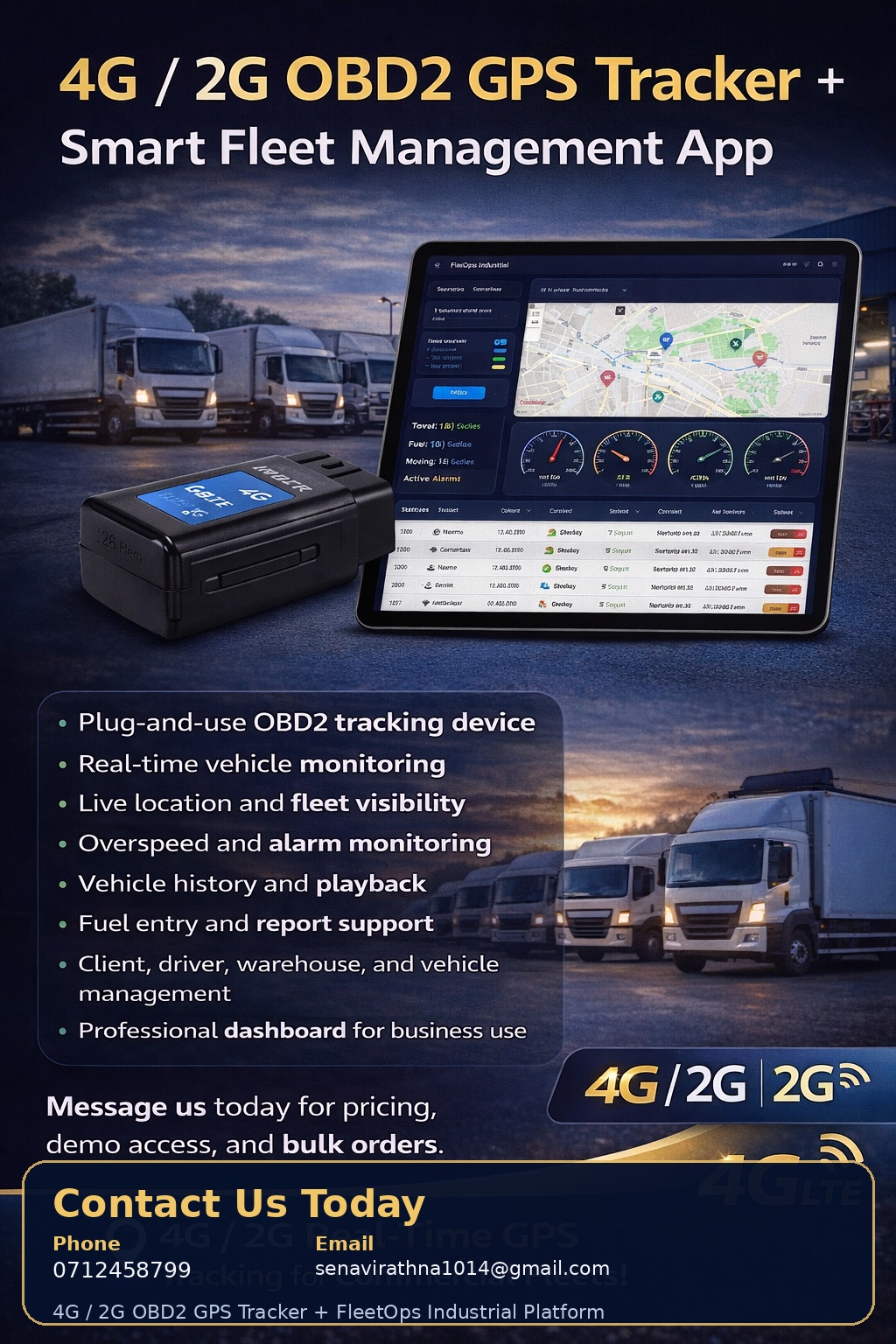
What the product includes
- OBD-II plug-in tracker option selected for vehicle and network compatibility
- Device, vehicle, driver, client, warehouse, and user records
- Live map, last-seen, motion, speed, voltage, and supported telemetry
- History playback and operational reporting
- Overspeed, stale/offline, low-power, and configured exception rules
- Pilot configuration, mapping, user onboarding, and handover notes
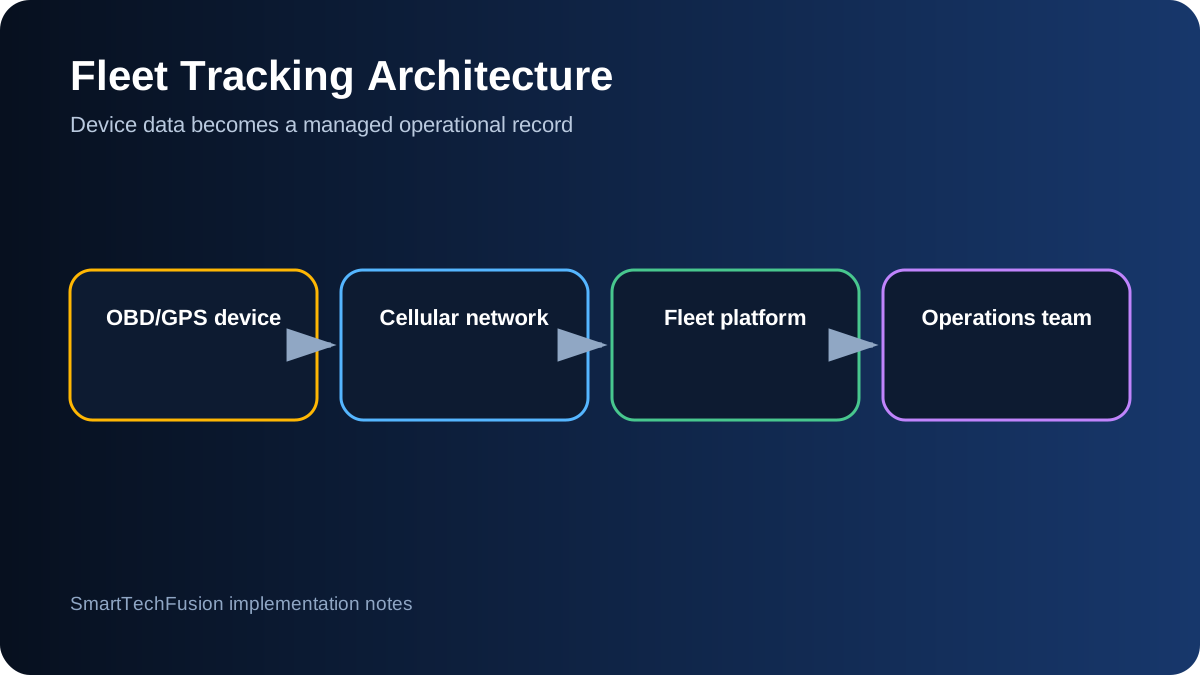
System architecture
The hardware is only one layer. The operating value comes from verified telemetry, disciplined mapping, event handling, and defined management routines.
Best suited for
- Companies piloting or expanding vehicle visibility
- Delivery, field-service, and transport operations
- Organizations needing driver, client, or branch separation
- Management teams requiring route history and exception reports
Inputs needed for a quotation
- Vehicle count, type, year, and operating country
- 4G/2G network availability and SIM responsibility
- Required telemetry, alerts, users, and report frequency
- Whether hardware supply, installation, platform hosting, and support are included
Dependencies and limitations
Vehicle and device compatibility
GPS and basic status are easier to standardize than vehicle-specific OBD parameters. Fuel, diagnostic, and ignition data depend on the tracker model, vehicle protocol, installation, and supported PIDs. Compatibility is confirmed during the pilot.
Network and platform
Coverage, SIM service, hosting, map services, and notification providers are third-party dependencies. Reporting interval and retention affect network and platform cost. Commercial pricing is prepared after the scope is confirmed.
Implementation sequence
- Confirm the vehicle register, required fields, users, alerts, and reporting scope.
- Select a small representative pilot group and map devices to vehicles.
- Validate location, reporting interval, ignition behavior, history, and alarms.
- Adjust rules and user roles using pilot evidence.
- Roll out in batches and deliver the final register, configuration, and operating guide.
Public reviews
No public reviews are displayed yet
SmartTechFusion does not publish placeholder ratings or invented testimonials. Customers who have purchased or commissioned this product may submit a review for verification and moderation.
Submit a customer reviewFrequently asked questions
Does the device work with every vehicle?
Not automatically. The OBD connector, power behavior, protocol, supported data, physical clearance, and country network must be checked.
Is 4G recommended?
For new deployments, 4G is normally the longer-term choice. 2G may remain an entry option only where coverage and network continuity are confirmed.
Can customers have separate logins?
Yes, the scope can include role-based access and client separation. Exact permissions are confirmed during onboarding.
Does the quote include installation and SIM charges?
Only when explicitly included. Hardware, shipping, SIM, hosting, map services, installation, support, and taxes are separated in the commercial quote.